
Rhea County Traffic Court Records
Where the case lives depends on the charge. A city ordinance citation usually stays with the municipal court. That means Dayton, Graysville, or Spring City. A state-law traffic matter may go to General Sessions instead. The citation itself gives you the clues. Look for the issuing agency, the court caption, and the citation number. And skip the Rhea County Clerk's vehicle portal for this. That office does vehicle and county administrative work, not court dockets.
What the record shows varies by court. Expect the citation, the charge, the scheduled date, any plea, filings, disposition, fines, costs, and payment status. Spring City's own code is a useful local example. Its municipal docket records the defendant name and warrant or summons number. It also lists the alleged offense, disposition, money owed, collection status, and workhouse status. One caution, though: a citation is an accusation, not a conviction.
Three Rhea County City Routes
Each city has its own municipal clerk. The AOC lists Dayton City Court Clerk Brandi McSpadden at 423-775-1818. It also lists Graysville City Court Clerk Chyenne Wilson at 423-775-9242 and Spring City Court Clerk Stephanie Winstead at 423-365-6441. Spring City's city page and the AOC directory disagree on the street address. A quick call before a visit is wise.
None of the three cities offers a public online docket search. Graysville and Spring City post no search at all. Dayton's online payment service does not let the public look up a name, citation, hearing date, or docket entry. For every city route, you need the citation in hand plus a phone call or a trip to the counter.
Looking Up a Traffic Ticket
Read the citation first. Write down the issuing city or agency. Add the court name, the citation number, the alleged violation date, and any appearance information. For Dayton, the Municipal Court payment portal may handle eligible payments. It is not a public case index. If your matter does not show up there, or the instructions are unclear, call the court directly.
- Identify the issuing court and copy the citation number exactly.
- Use Dayton's payment page only if the citation belongs there and is eligible.
- Call the issuing clerk with the citation number, name, and date.
- Visit the municipal or county counter if staff says inspection is required.
- Confirm the active court date, response method, amount, and record-copy process.
Dayton Payment Is Not Search
Dayton's payment screens show accounts, registration, and card-payment controls. What they do not offer is a free public search by citation name or case number. The city also posts a citation-information PDF, but it returns an error when opened, so treat anything drawn from it as unconfirmed until the city verifies it.
The official Dayton payment source exists to take payments for eligible matters. It promises no docket access. Call the city court before using it whenever the amount, the status, or payment eligibility is unclear.
How to Find Your Traffic Court Date
The citation may print your appearance date, time, and location. Treat that as a starting point, not the final word. A continuance, reset, corrected filing, or transfer can change any of it. Confirm with the issuing court. Rhea County's district rules set recurring criminal settings. Those schedules are not a name-by-name traffic calendar, and they cannot confirm a single citation.
| Citation number | Copy the full code, such as citation number as printed; no single local format was confirmed. |
|---|---|
| Court | The issuing municipal court or county-level trial court. |
| Date and time | The current appearance or hearing setting, verified by the clerk. |
| Location | City Hall, municipal court, or county courthouse as directed. |
| Status | Pending, continued, disposed, transferred, or subject to further action. |
When you call, ask whether the location or room changed. Ask whether you need identification or documents. If the matter is at the Justice Center, arrive early enough for courthouse screening. One last note on reading a setting: it shows what is scheduled. It does not prove the hearing happened. It does not tell you the result.
Rhea County Citation Terms
Traffic records use short labels that invite overreading. When entries conflict, the newest dated entry controls over an old setting.
- Citation
- The charging or notice instrument, not a conviction.
- Summons
- A direction to appear or respond.
- Disposition
- The court's recorded result.
- Continuance
- A setting moved to a later date.
- FTA
- A reported failure to appear that must be confirmed with the court.
If a short docket label confuses you, ask the clerk for the judgment or disposition document. The clerk can hand you the record but cannot interpret its legal effect.
Pay or Contest a Ticket
Never assume payment is the right move, or that every citation can be paid online. The issuing court's current instructions control eligibility, deadline, amount, and payment method. They also control any request to contest or seek a different disposition. Dayton's posted instructions pointed people to city contact for driving-school or installment options. That link no longer works. So verify those options with the city before counting on them.
| Paying the Ticket | Contesting the Ticket |
|---|---|
| Follow the issuing court's eligible payment process. | Ask the issuing court how and when to enter a response. |
| Confirm amount, deadline, and recorded result first. | Confirm the active hearing date and required appearance. |
| Dayton portal, mail, or counter only as authorized. | Use the specific municipal or county court's instructions. |
Missed date: Contact the issuing court first. If it reported a failure to appear, satisfy or correct the court matter, then follow current Tennessee Safety notice and reinstatement instructions.
Rhea County Failure to Appear
Tennessee Safety guidance explains what the state does after a court reports an FTA. The state support article walks through notice, a correction period, reinstatement, and temporary restricted-license steps. Those procedures can change. A citation alone does not mean a suspension happened. Check the actual court and state notices.
The state page only covers license consequences after the court reports. The local clerk is still the first stop. Go there for the underlying traffic case, the current balance, or a new setting.
Traffic Court Record vs Driving Record
Two different offices hold two different files. The issuing court keeps the citation case. The Tennessee Department of Safety and Homeland Security keeps the Motor Vehicle Record. You can order the MVR for your own authorized use through state channels, but it will never replace the docket, judgment, receipt, or certified court record.
| Court Traffic Record | Driver Record | |
|---|---|---|
| Kept by | Issuing city or trial-court clerk | Tennessee Department of Safety |
| Shows | Citation, settings, filings, disposition, fine, and costs | State driver-history data under its access rules |
| How to get it | Phone, counter, mail, or accepted clerk request | Official online, in-person, or mail MVR process |
The official Tennessee MVR page lays out five-year and ten-year records, the identity fields required, mail and counter routes, and the privacy limits.
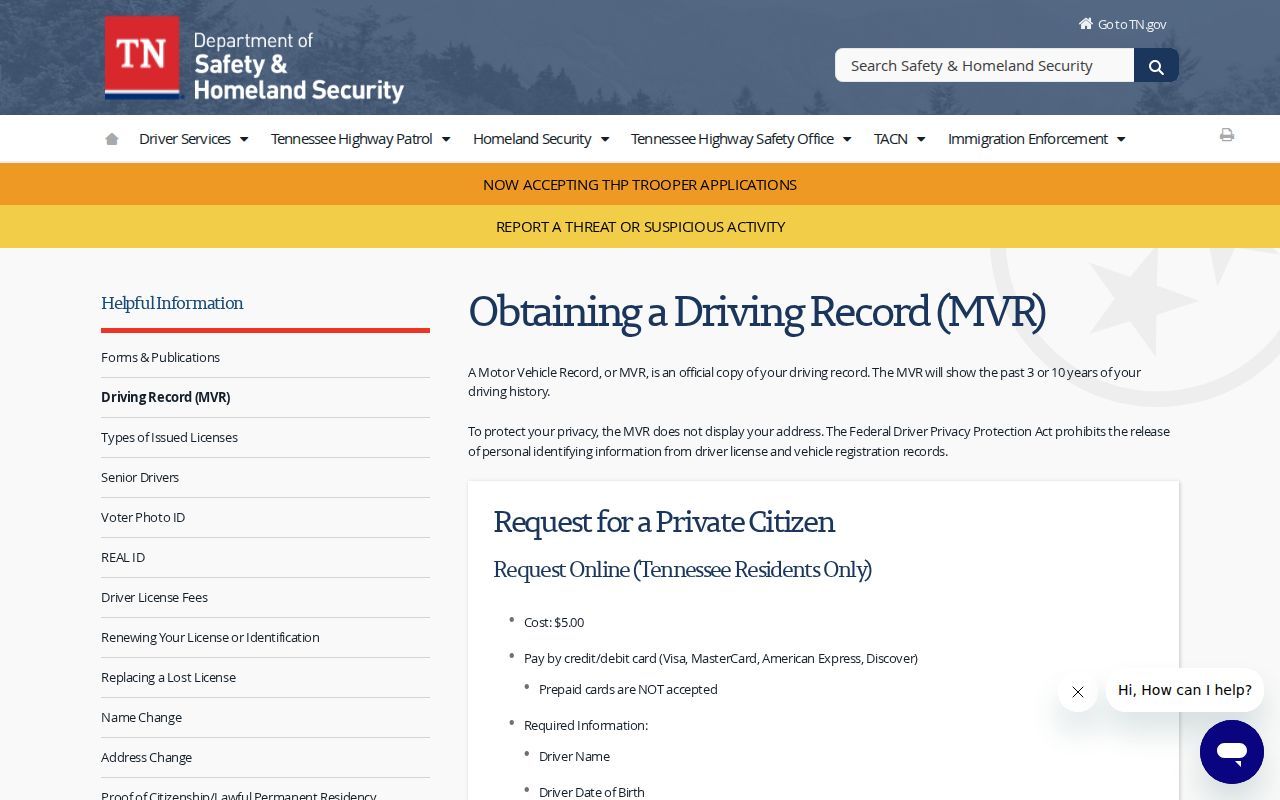
The state page shows why an MVR request is separate from pulling a traffic-court docket or a certified judgment.
Restricted MVR Systems Explained
IMVR sits behind a login and a subscription. Federal driver-privacy rules limit who may use it. The LMVR demonstration takes a different shape. It shows a driver-license field, a last-name field, and a flat $7 search charge whether or not anything comes back.
Neither one is a free Rhea County court docket search. The official IMVR login shows the restricted access the state built into that driver-history system.
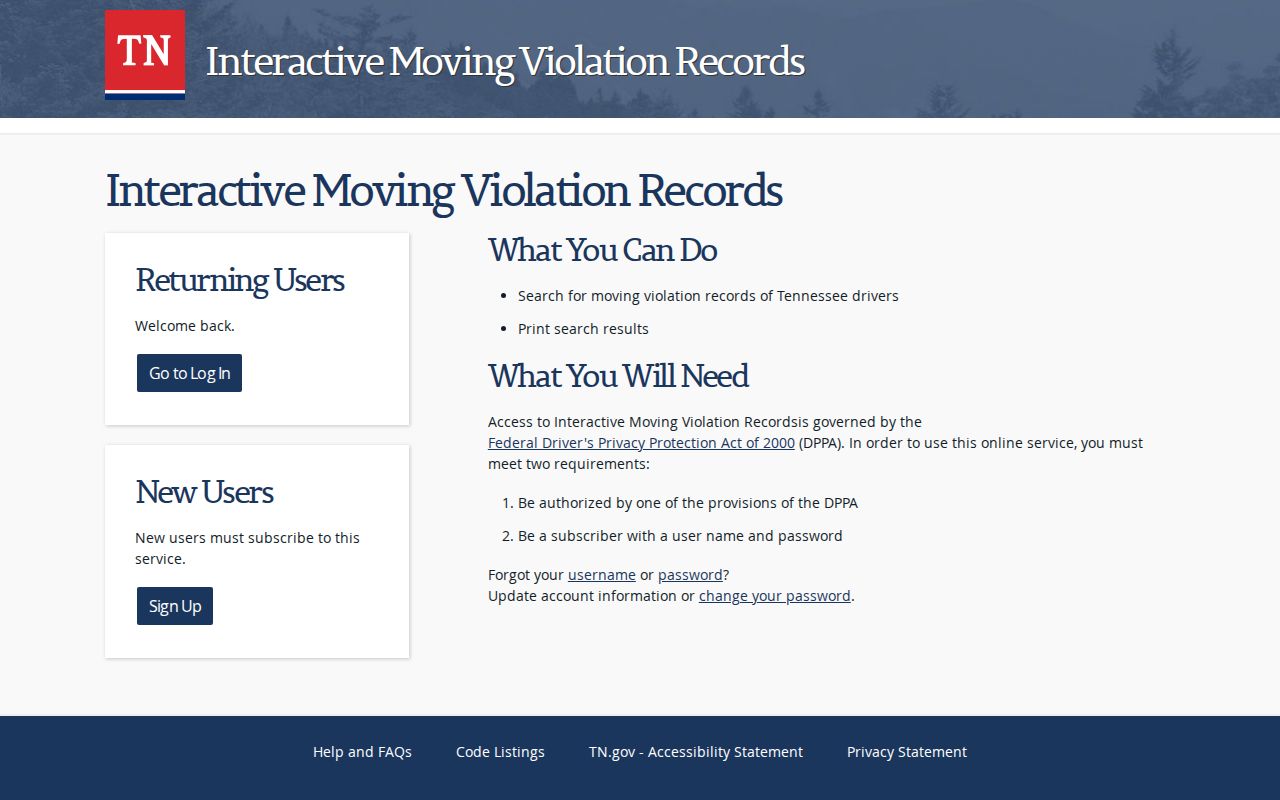
A login wall and an authorization notice separate protected driver-history tools from the public court-record request route. The official LMVR demonstration shows the narrower lookup, which asks only for a driver license number and a last name.
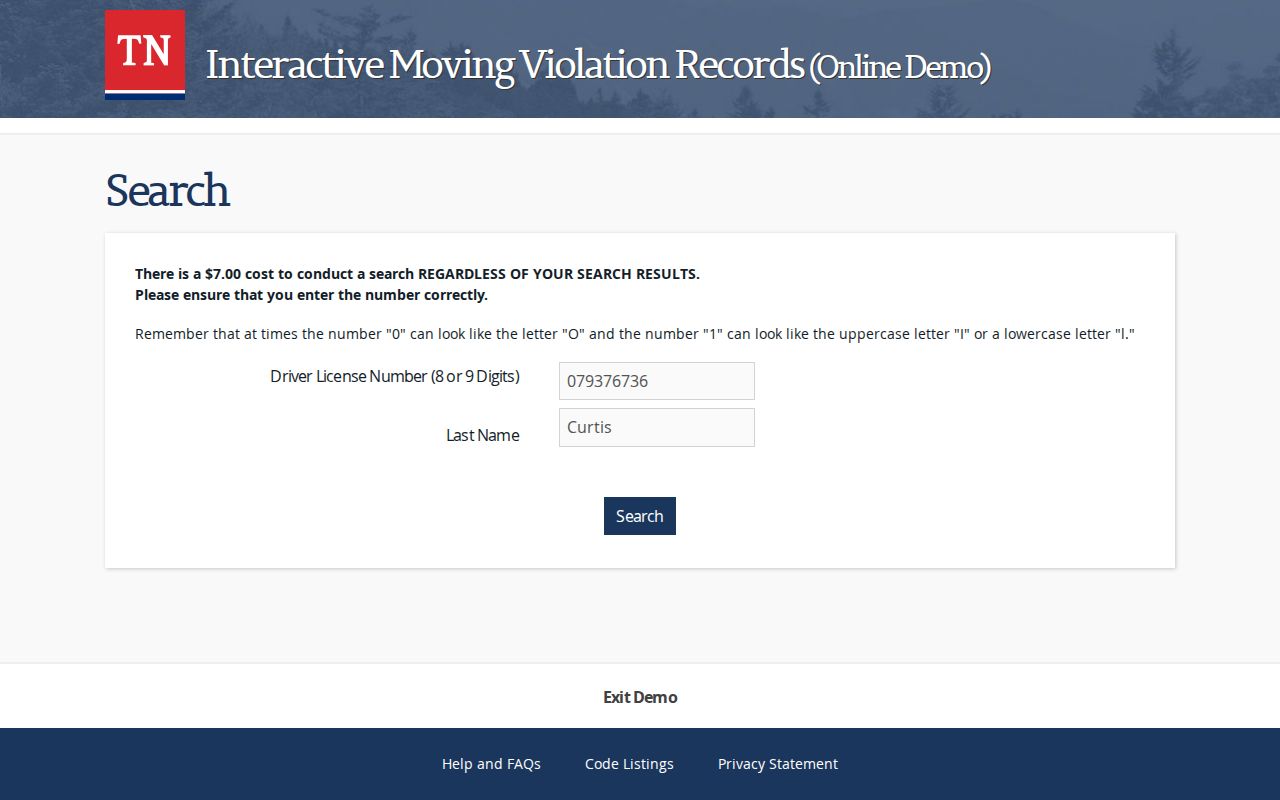
Keep that distinction in mind. A paid state driving-record query answers questions about license history, not about a municipal or General Sessions traffic docket in Rhea County.
Spring City Docket Fields
Spring City spells out its municipal docket in unusual detail. The ordinance requires the defendant name and the warrant or summons number. It also lists the alleged offense, fines, penalties, and costs. Collection status, workhouse commitment status, and any other relevant information belong on the docket too. That list is a lesson in how to ask. Request the specific fields you need instead of just asking whether a ticket exists.
The same code covers municipal court costs and continuance charges. Current amendments rest with the Spring City clerk. The amount assessed in a given case does too. A code provision proves nothing about one citation. When the facts matter, ask for the dated docket entry, the disposition, and the receipt.
Copies and Fees
Rhea County and its municipal courts post no current copy-fee schedule for traffic cases, so ask the issuing clerk. Plain copies, certified copies, searches, delivery, and payment fees can all carry separate charges. Then supply the issuing city, the citation number, the date, the court date, and the item you want, whether that is a docket entry, judgment, receipt, or certified record.
| Item | Fee | Notes |
|---|---|---|
| Court docket or plain copy | Confirm with issuing clerk | No Rhea-specific schedule located |
| Certified court copy | Confirm with issuing clerk | State whether certification is required |
| State MVR | $5 | Official online, in-person, or mail options |
Mail MVR requests go to Tennessee Safety with the identifying fields and an approved payment. Expect about two weeks of processing. Certified copies travel by mail as well. Copy timing at the courthouse can differ. A payment receipt, a court judgment, and an MVR are three different records, so a full paper trail may take three separate requests.