
Searching the Spring City Court Docket
Spring City's official administration page assigns traffic-citation service to City Hall. It lists Stephanie Winstead as Court Clerk. Call 423-365-6441, extension 102. Have the citation number, the cited name, the issue date, and the printed court date ready. Then ask for the current public docket entry, the disposition, the balance, or a copy. The court offers no official public search form by party name or case number.
If the caption reads General Sessions, Criminal, Circuit, or Chancery rather than Spring City, take the case to the matching Rhea County clerk. That step prevents a false no-record answer. The county publishes no public trial docket interface. So the clerk's phone, the counter, and a narrow written request remain the practical routes.
- Identify Spring City as the named court, not merely the address.
- Give the court clerk the citation number and exact identifying details.
- Request the newest setting, status, disposition, or payment entry.
- Ask for the receiving court and number if the matter moved.
- Confirm the place and time before attending or paying.
Spring City Docket Fields
Spring City's ordinance compilation describes the municipal docket with unusual clarity. Required fields include the defendant's name and warrant or summons numbers. They also include the alleged offense, the disposition, fines, penalties, costs, collection status, workhouse commitment status, and other relevant data. Those are index and outcome fields. A short entry may still point to something more. It may point to a summons, order, or receipt kept behind the docket itself.
- Disposition
- The court's recorded result, which must be read in context.
- Cost
- A court charge distinct from an ordinance fine or state tax.
- Collection
- The record of whether assessed sums have been received.
A docket entry proves an event was recorded. It does not prove every allegation or make every attached item public. When the exact result matters, ask for the underlying public order.
Spring City Municipal Court Basics
Spring City Municipal Court handles matters within the town court's legal reach, including municipal ordinance and traffic work routed there. It keeps its own clerk and docket. That file is not held by the Rhea County Clerk, whose office handles vehicle and county administrative services, and it does not flow automatically into the county Justice Center docket.
The official City Hall page lists 369 Front Street, Spring City, Tennessee 37381, and PO Box 369, with weekday hours of 8:00 a.m. to 4:30 p.m. The AOC directory, though, places the court clerk at 229 Front Street. Because those official sources disagree, call before you visit or mail a request. Ask which site receives court-record visitors and which address accepts a copy request.
Spring City Clerk Address Check
The address conflict is a practical search issue, not a reason to guess. A current municipal service page and a state court directory can describe different offices, mailing points, or older information. The clerk can confirm where the Spring City docket lives. The clerk can also say whether inspection is available and how to address a mailed request. The official Spring City administration page supplies the current City Hall contact. It also gives the traffic-citation service details.
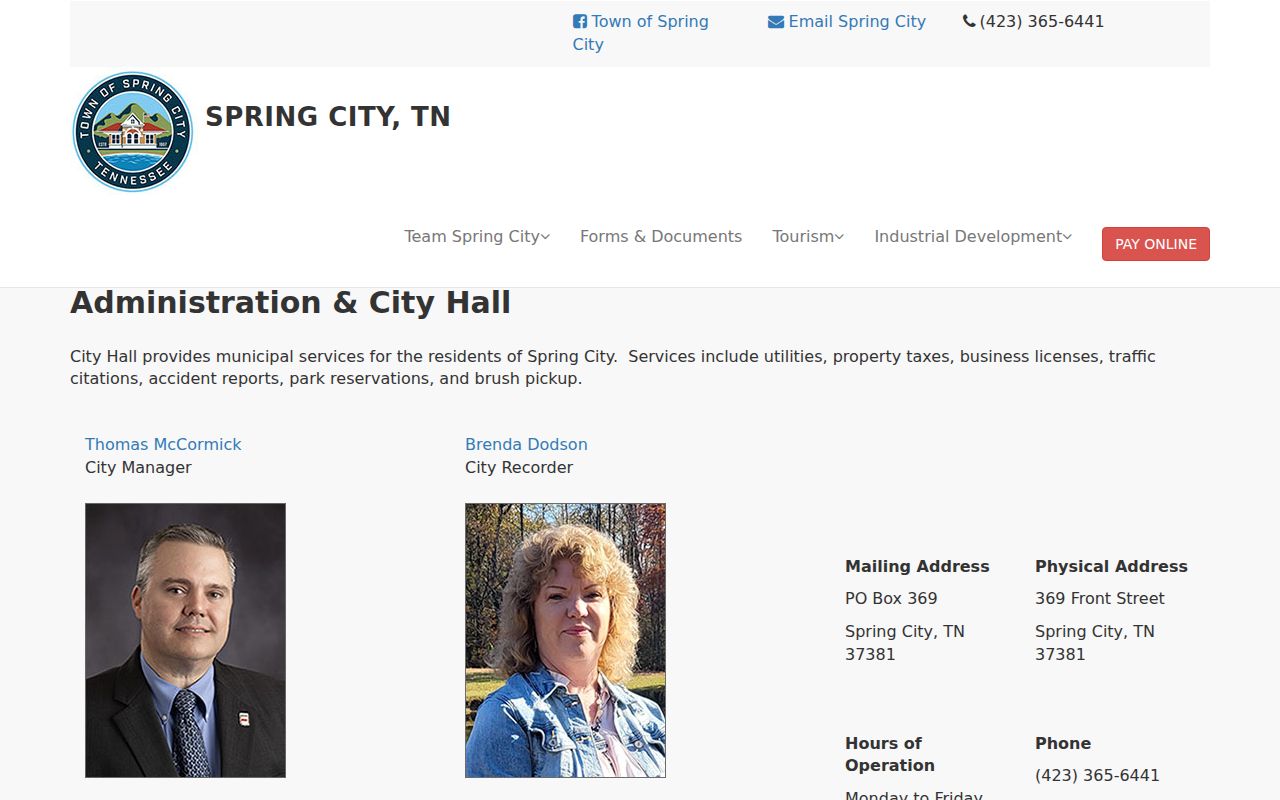
Confirm the city source on the day of a visit. Office locations, hours, and procedures can change.
Court Dates and Settings in Spring City
For a Spring City municipal matter, the citation, the summons, and the newest clerk entry are the main date sources. A continuance moves a setting. It does not dismiss the case. Under the city code, the first defendant-requested continuance is free. A charge is listed after that first request. Confirm current rules and assessments before relying on the code text. Ask whether the event remains set and whether attendance is required.
| Date | The latest municipal setting in the clerk's record. |
|---|---|
| Time | The stated call or hearing time. |
| Location | The current place confirmed by the Spring City clerk. |
| Process | Citation, warrant, or summons tied to the entry. |
| Setting Type | Initial appearance, hearing, trial, review, or continuance. |
Spring City Docket Accounting
The municipal code treats the docket as more than a list of dates. It requires financial fields. It directs the judge to pay over funds daily and calls for monthly reports to the board of commissioners. So one Spring City case can generate linked records: the procedural docket, an order or disposition, assessed fines and costs, and collection entries.
The code lists $130 in municipal ordinance court costs. It also lists a $7 charge after the first defendant-requested continuance, plus possible added taxes, fees, and ordinance fines. Those are code provisions. They are not a quote for a current case. Ask Stephanie Winstead for the present assessment and an itemized record before paying. A payment receipt answers a different question than the docket history.
Traffic Tickets in Spring City
Spring City handles traffic citations through City Hall, per the city service page. When you call, use the number and court date printed on the ticket. Ask whether the ticket is payable. Ask whether an appearance is required. Find out whether the docket shows a continuance or other new event. The clerk controls that answer, not a payment assumption.
A municipal citation file stands apart from a Tennessee motor vehicle record. The court file may show the charge, settings, court result, and sums assessed. The Department of Safety maintains the state driving-history product. For the wider routing distinction, use the Rhea County traffic ticket resource.
Spring City Copy Requests
City-court copies in Spring City start with a simple step: tell Stephanie Winstead exactly what you want. A docket entry counts. So do a disposition, a judgment, a payment receipt, or a certified copy. The narrower you make it, the better. Give a tight date range. Add the citation or summons number, and ask up front whether you can inspect the record in person, get it electronically, pick it up, or have it mailed. A fee estimate before you order saves surprises.
Some files carry protected material. Juvenile records, adoptions, sealed items, victim information, and personal identifiers can all be limited by law. A court order can limit them too. If that comes up, request a redacted version instead of the restricted content. A clerk can often release the open portion of a file while withholding the rest. Hang on to your request and the reply. The exact record and the stated rule stay clear.
What if nothing comes back? Check the spelling, the initials, and the date range you gave. Ask whether the record falls before the electronic index began, or whether it sits under a warrant or summons number instead of a name. One more tip: asking for the register from filing through disposition beats a broad request about a person. You are asking the office to locate an existing record, not to write a new summary.
Where Spring City Cases Go
Not every Spring City case ends its journey at the city court. Ordinance violations usually stay right there. A state-law charge may instead live in General Sessions or Criminal Court. So may a matter that gets transferred. Circuit Court takes general civil work, while Chancery handles probate and equity. If a case moves, a second identifier can appear. Ask Spring City which court received it and what the new number is.
Docket flow: Spring City Municipal Court › Rhea County Courts › Circuit Court or Criminal Court
For the local file, the city clerk is still the place to go. Jamie Holloway handles Circuit, Criminal, and General Sessions records; Bonnie Doss serves as Clerk and Master for Chancery. After you have checked the Spring City route, turn to the Rhea County court docket for the county-level detail.
Spring City Records in Context
Spring City counted 1,949 residents in the 2020 Census. Yet the town keeps a clerk and record system all its own. Its story runs from a Cincinnati Southern Railroad stop. It passed through the old Sulphur Springs name. Growth later came from TVA and Watts Bar Lake. That civic past explains why municipal records sit with the town rather than inside a generic county search. The Spring City official history lays out that local setting.

Keep the history in its lane. It is civic background, and it says nothing about whether a current citation is open, paid, or set for court. The CTAS Rhea County profile offers the county's official civic and judicial framing for the town.
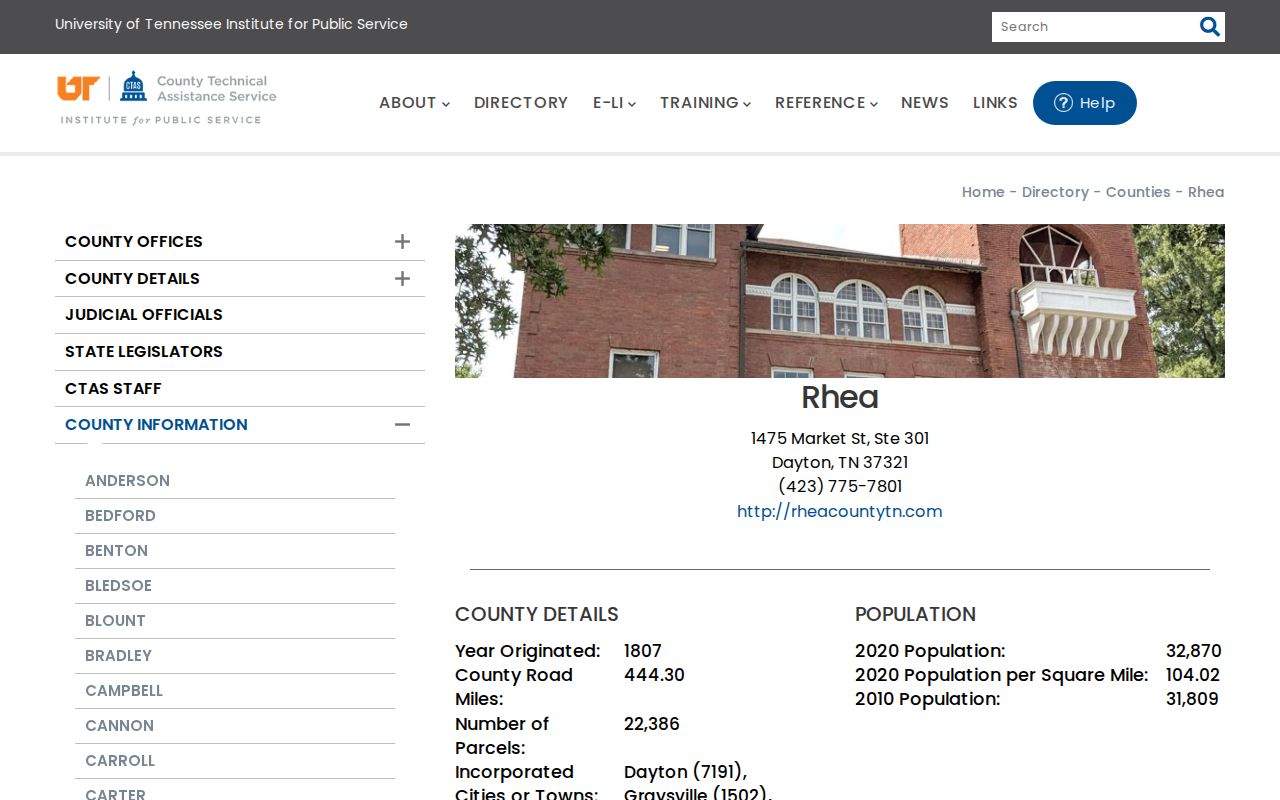
The county profile can confirm the town's place count and district. Even so, the Spring City clerk keeps the municipal docket.
Spring City's ordinance-based fields reward careful note-taking. Give each fact its own slot. List the court, the summons or warrant number, the alleged offense, the newest setting, the disposition, and the collection status. Resist squeezing them into one word like closed. A case can hold a disposition while money is still owed, and a payment can post without touching the legal result. For that context, go to the official docket and the underlying order.
When a record looks thin, ask whether a separate judgment, payment ledger, or continuance order exists. Request only the public part. The docket can point to those papers without copying them in full. Along the same lines, the town's monthly financial reporting rule is not a public name-by-name case calendar. One tracks municipal accounting. The other identifies court events.
Unpaid Spring City Amounts
Owe the Spring City court money? Ask the clerk for the current itemized balance, the due date, and any court-approved payment or continuance options. The municipal code describes costs and collection fields. But it cannot show later amendments or the present status of your file. An unpaid city entry alone does not mean the state will act on a license.
If a Tennessee Safety notice shows up, settle the court matter first. Then follow whatever current instructions the notice states. Keep any receipt or clerk confirmation the agencies require. Remember the split: the court decides and records the municipal matter, while the Department of Safety runs its own state record. Treat those two as one and your search comes up incomplete.
Spring City Court Record Access Rules
Tennessee Supreme Court Rule 34 presumes court records are open. A statute, another rule, or a court order can say otherwise. In Spring City, start with the municipal clerk. Ask for the court's current access policy before you dig deeper. An open docket can sit beside sealed papers or redacted fields. Being named as a party on the docket does not open every document attached to it.
Key rule: Tennessee Supreme Court Rule 34 covers case, administrative, and judicial records while recognizing lawful restrictions.
The Tennessee Public Records Act provides Tennessee citizens a public-agency inspection route, but the maintaining clerk is the right first contact for a Spring City court file.
Keep the clerk's response with the request date and citation number. That record helps distinguish a fresh status check from an older copy.